







Key takeaways
- Gold dropped to its lowest level since September 2025 on Friday, Nov. 20, touching about $3,514 an ounce during the day.
- It was on track for its worst week in eight months, with losses of roughly 8% to 9.5% depending on the time of day.
- The main drivers: a likely Federal Reserve rate hike in December, a strong U.S. dollar, and investors selling gold to cover losses in AI stocks.
- Silver and bitcoin fell too, so “safe” assets didn’t act very safe this week.
- If you own gold, a scary week isn’t a reason to panic-sell. If you’re tempted to buy the dip, keep it a small slice of your savings.
If you bought gold this year because it felt like the one thing that couldn’t go wrong, this week probably stung. On Friday, Nov. 20, the price of gold slid to a 14-month low, and the metal was headed for its steepest weekly drop since March.
Here’s what happened, why it happened, and what it actually means for regular people who own a few gold coins, a gold ETF in a brokerage account, or are wondering whether now is a good time to buy.
What happened to gold this week
Spot gold fell as low as $3,513.54 an ounce on Friday, its lowest price since early September 2025, according to both CNBC and a Reuters report carried by Kitco. By the afternoon, CNBC had gold down 2.8% for the day at about $3,518.
For the week, the damage depends on when you checked. Reuters put the weekly loss at about 8% Friday morning; by the afternoon, CNBC had it at roughly 9.5%. Either way, both outlets say it was gold’s worst week in about eight months.
Other metals followed it down. Silver traded in the low $40s an ounce on Friday, per both reports, and platinum and palladium also slipped. All of them were heading for a second straight weekly loss.
Why gold is falling
Gold has a reputation as the thing you buy when everything else is falling apart. So why did it drop during a week when the stock market was getting hammered? A few reasons stacked up at once.
1. The Fed looks set to raise rates again
Traders are betting heavily that the Federal Reserve will raise interest rates by a quarter point in December. CME’s FedWatch tool showed odds above 95% on Friday (CNBC cited 96%, Reuters 99%). Philadelphia Fed President Anna Paulson also flagged inflation risks that could justify another hike, which both reports said added fuel to the selloff.
Why does that matter for gold? Gold doesn’t pay interest. When savings accounts, CDs and Treasury bonds pay more, holding a shiny metal that pays nothing looks less attractive. Analysts quoted by CoinDesk pointed specifically to rising “real” yields, meaning bond returns after inflation, as the big headwind. We covered the December rate outlook in more detail in Fed Rate Hike Likely in December: What It Means for You.
2. The dollar is strong
Gold is priced in dollars worldwide. When the dollar gets stronger, gold gets more expensive for buyers using other currencies, which tends to weigh on demand. The dollar index was hovering near 103.9 this week, around a 19-month high, according to Reuters and CoinDesk.
3. Investors sold gold to cover stock losses
This is the part that surprises people. When stocks fall hard, some investors and funds need cash fast, so they sell whatever is still worth something. That often includes gold. A trader quoted by CNBC said the AI-related stock selloff was “prompting some forced liquidations of gold positions to cover losses.” A Reuters source said nearly the same thing.
And stocks did fall hard. The S&P 500 slid into correction territory on Friday, meaning more than 10% below its October record, as AP and CNBC both reported. A lot of that came from AI and chip stocks, including a rough week for Anthropic’s freshly listed shares.
Bitcoin didn’t save anyone either
Bitcoin fans like to call it “digital gold.” This week, it behaved more like a tech stock. Bitcoin traded around $60,000 on Friday, and both CNBC and Investing.com reported it was on track for a seventh straight weekly loss, its longest losing streak since 2022. Investing.com also noted record outflows from a major bitcoin ETF the day before.
The bigger lesson: in a fast, scary selloff, a lot of things that are supposed to move independently end up falling together, because people sell what they can to raise cash.
What this means for your money
If you already own gold
Gold is volatile. It can rise fast and fall fast, and a single bad week doesn’t tell you much about the next few years. If you bought gold as a small hedge, a modest slice of your savings, that job hasn’t changed. Selling now mostly locks in a loss.
Ask yourself one honest question: did you buy gold as long-term insurance, or because it was going up and everyone was talking about it? If it was the second one, this is a good moment to decide how much you’re really comfortable holding, without letting one ugly Friday make the call for you.
If you’re thinking about buying the dip
Prices are lower than they were a few weeks ago, and Reuters reported that bargain hunters in India and China were stepping in to buy physical gold. Some analysts think a bottom could come soon. Others warn prices could drop further first. Nobody knows which one is right, and that includes us.
If you do want some gold, a few ground rules:
- Keep it small. Gold should be a side dish, not the main course. It pays no interest or dividends.
- Watch the markups. Physical coins and bars often sell above the spot price, and dealers buy them back below it. Gold ETFs usually cost less to buy and sell, but they charge a yearly fee.
- Skip the TV and social media pitches. High-pressure “gold IRA” sales calls and “buy before it’s too late” ads tend to come with high fees. If someone is rushing you, walk away. Our guide to red flags before you buy applies here too.
- Buy in pieces. Spreading purchases over a few months means you don’t have to guess the exact bottom.
If you don’t own any gold
Honestly, you don’t need to do anything. For most people, the basics still matter more than any single asset: an emergency fund, paying down high-interest debt, and steady contributions to a diversified retirement account. With rates likely going up, high-yield savings accounts may keep paying decent interest, which is one of the reasons gold is struggling in the first place.
If you’re worried about your 401(k)
This week’s drop in gold is part of a bigger market selloff. If you’re watching your retirement balance fall, read our breakdown of what a stock market selloff means for your 401(k). The short version: if retirement is years away, keep contributing and avoid making big moves in a panic.
What to watch next
- The Fed’s December meeting. A hike is mostly priced in already. Any surprise, either way, could move gold.
- Inflation data. Hot inflation numbers make more rate hikes likely, which usually hurts gold.
- The dollar. If the dollar’s rally cools off, gold could find some support.
- The stock market. If the AI selloff calms down, there may be less forced selling of gold.
Gold had a terrible week, but it’s been through plenty of those. The smartest move for most people is to keep gold in its lane: a small hedge, not a get-rich-quick bet, and definitely not something to buy or sell in a panic.
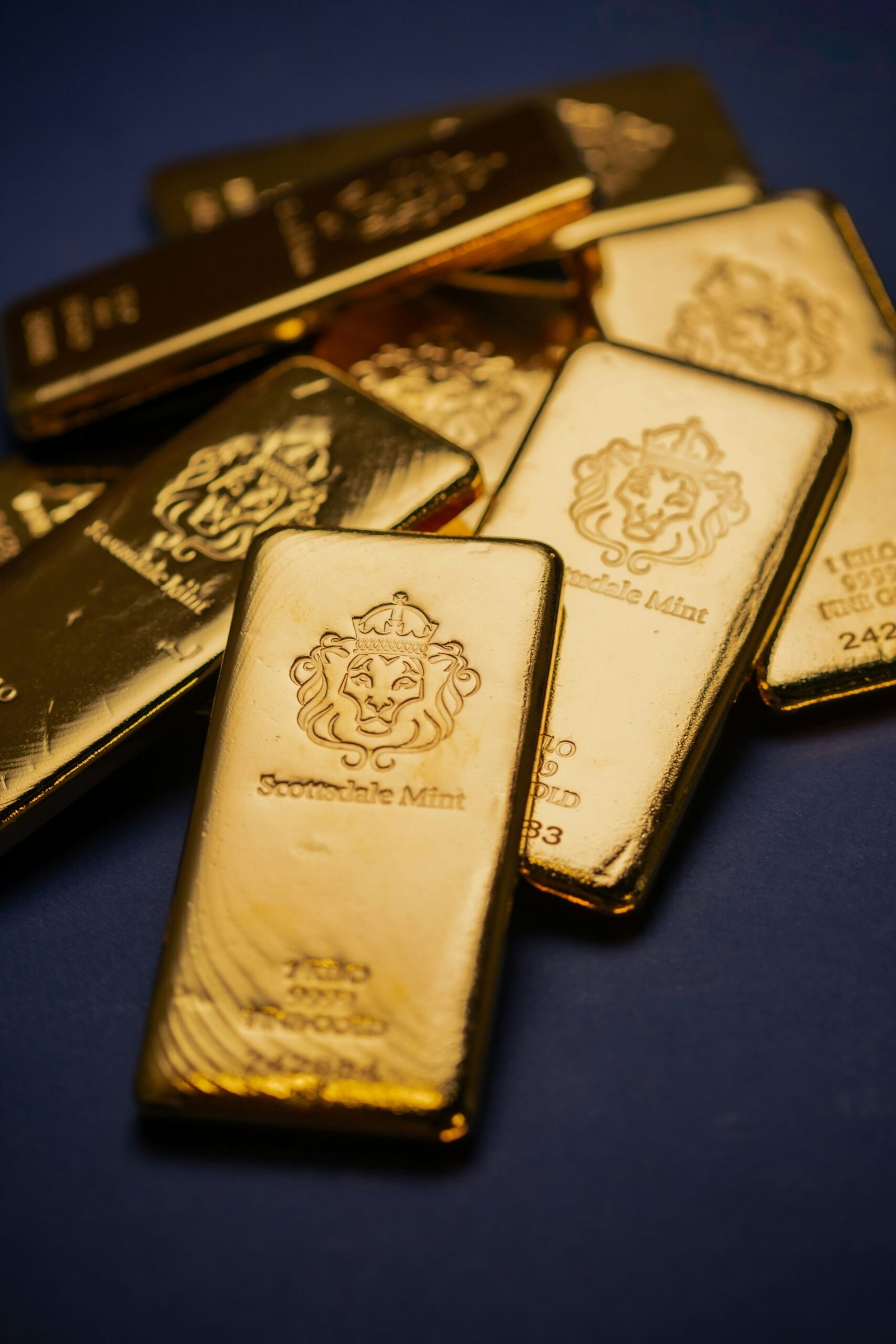
Photo: Scottsdale Mint / Unsplash
Sources
- CNBC: Gold’s slide deepens as AI rout, rate hike bets hurt bullion (Nov. 20, 2026)
- Reuters via Kitco: Gold slides toward worst week in eight months on hawkish Fed outlook (Nov. 20, 2026)
- Reuters: Tech leads global stocks rout, Treasury yields fall (Nov. 20, 2026)
- CoinDesk: Here’s what’s crashing gold and likely weighing on bitcoin too (Nov. 20, 2026)
- CNBC: Bitcoin sell-off: Crypto is failing the ‘digital gold’ test again (Nov. 20, 2026)
- Investing.com: Bitcoin on track for seventh straight weekly loss as ETF outflows hit record (Nov. 20, 2026)
- AP: S&P 500 sinks 3.7% and the Nasdaq composite goes negative for the year (Nov. 20, 2026)
- CNBC: S&P 500 correction: What caused the market sell-off (Nov. 20, 2026)
This article is for informational purposes only and is not financial advice.